
Services
A new lawn on bare ground
Maybe the old lawn has already gone, a patio has been taken up, or a border has been cleared. Either way, there's soil and no grass yet, and that's a good place to start.
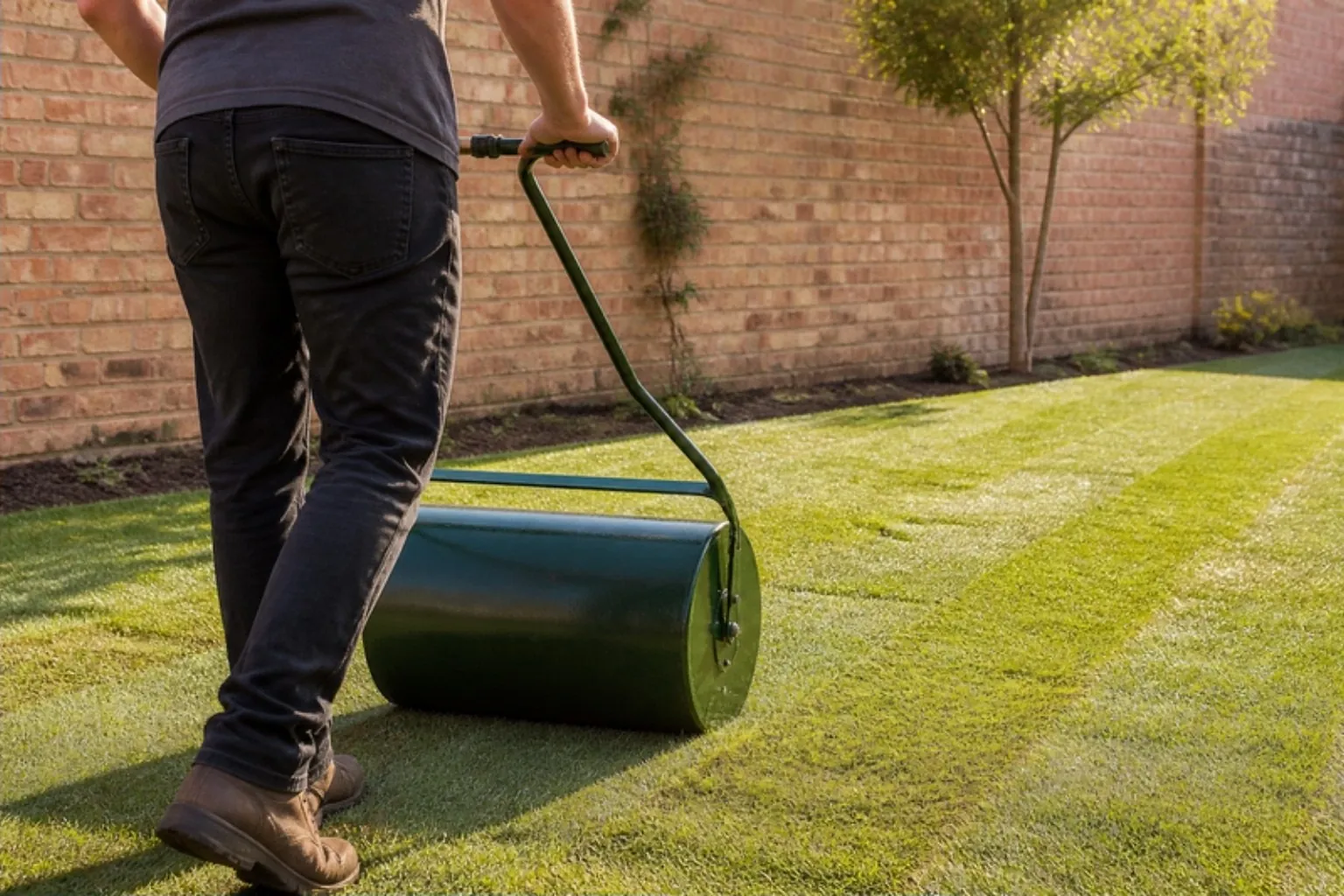
Typical starting points
-
Dug-over soil
A garden that's been cleared or rotavated and left.
-
Old gravel areas
Gravel and membrane taken out, soil brought back in.
-
Former patios or sheds
Hardstanding removed, base dug out and filled with topsoil.
-
Failed seeding
Patchy seed that never took, cleared and turfed.
From soil to lawn
Clear and check
Stones, roots and weeds out, and a look at what the soil is like underneath.
Improve the soil
Loosening anything packed hard and adding topsoil where it's shallow or poor.
Level and firm
Raking, treading and raking again so the surface is even and won't sink later.
Lay and water
Turf rolled out with tight joints, trimmed to shape and watered in.
Why the ground matters most
The turf only looks as good as what's under it. Soft spots sink, high spots get scalped by the mower, and thin soil dries out fast in summer. Getting the base right is most of the job, and it's the part we take most care over.
Questions people ask
How deep should the soil be?
For a lawn that stays green through dry spells, around 10 to 15cm of decent topsoil is a good target. If yours is thinner, we'll include topsoil in your quote.
Do you put a membrane under the turf?
No. Grass roots need to go down into the soil, so a weed membrane under turf does more harm than good.