
Services
Levelling and topsoil before turfing
Lumps, dips and a lawn that tilts the wrong way are easiest to fix before the turf goes down. We get the ground even first, adding topsoil wherever it's needed.
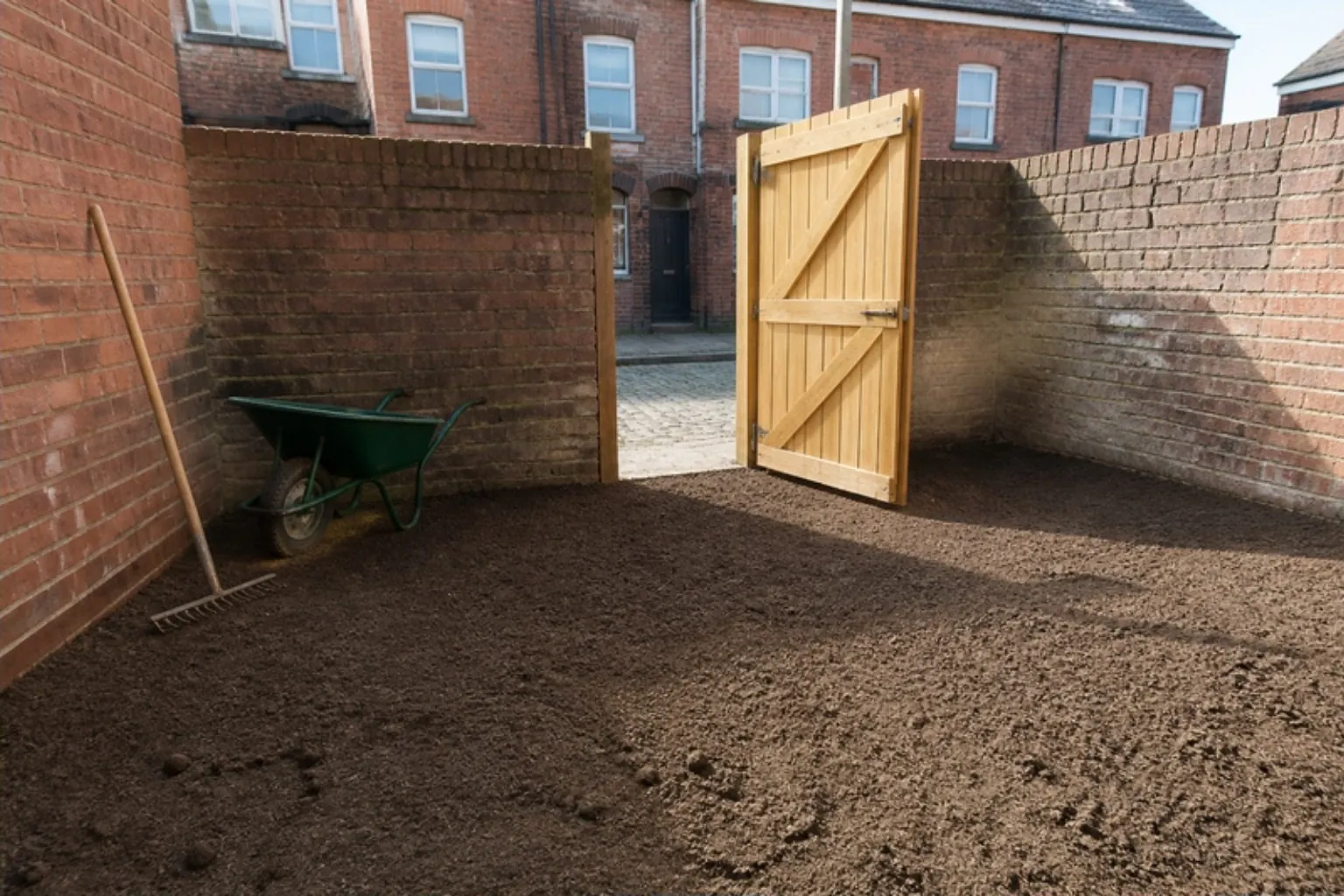
Why levelling first pays off
A level lawn is easier to mow, wears more evenly and doesn't hold puddles. Small dips can be filled with topsoil; bigger changes in height may mean moving soil from high spots to low ones, or bringing more in.
Many Newcastle gardens slope, particularly in the west of the city and down towards the river. We can ease a gentle slope so it's comfortable to use, but steep banks may need steps or retaining walls, which are a different job.
Rough topsoil calculator
Enter your lawn area and a depth to get a feel for how much soil is involved. Your quote will include the right amount for your garden.
2.5 m³ of topsoil
About 3.5 tonnes, using roughly 1.4 tonnes per cubic metre. Wet soil is heavier, so use it as a rough guide.
How we level a garden
Read the ground
Find the high and low points and decide where water should run.
Move or add soil
Shift soil from humps to hollows, then top up with topsoil.
Firm in layers
Tread and rake as we go, so nothing sinks later.
Final rake
A fine, even surface ready for turf.
Questions people ask
Can you level a lawn without lifting it?
For small hollows, a top dressing can help an existing lawn. If the whole garden is uneven, lifting the grass, levelling and returfing gives a far better result.
What kind of topsoil do you use?
A screened topsoil suited to lawns, free of large stones and roots.